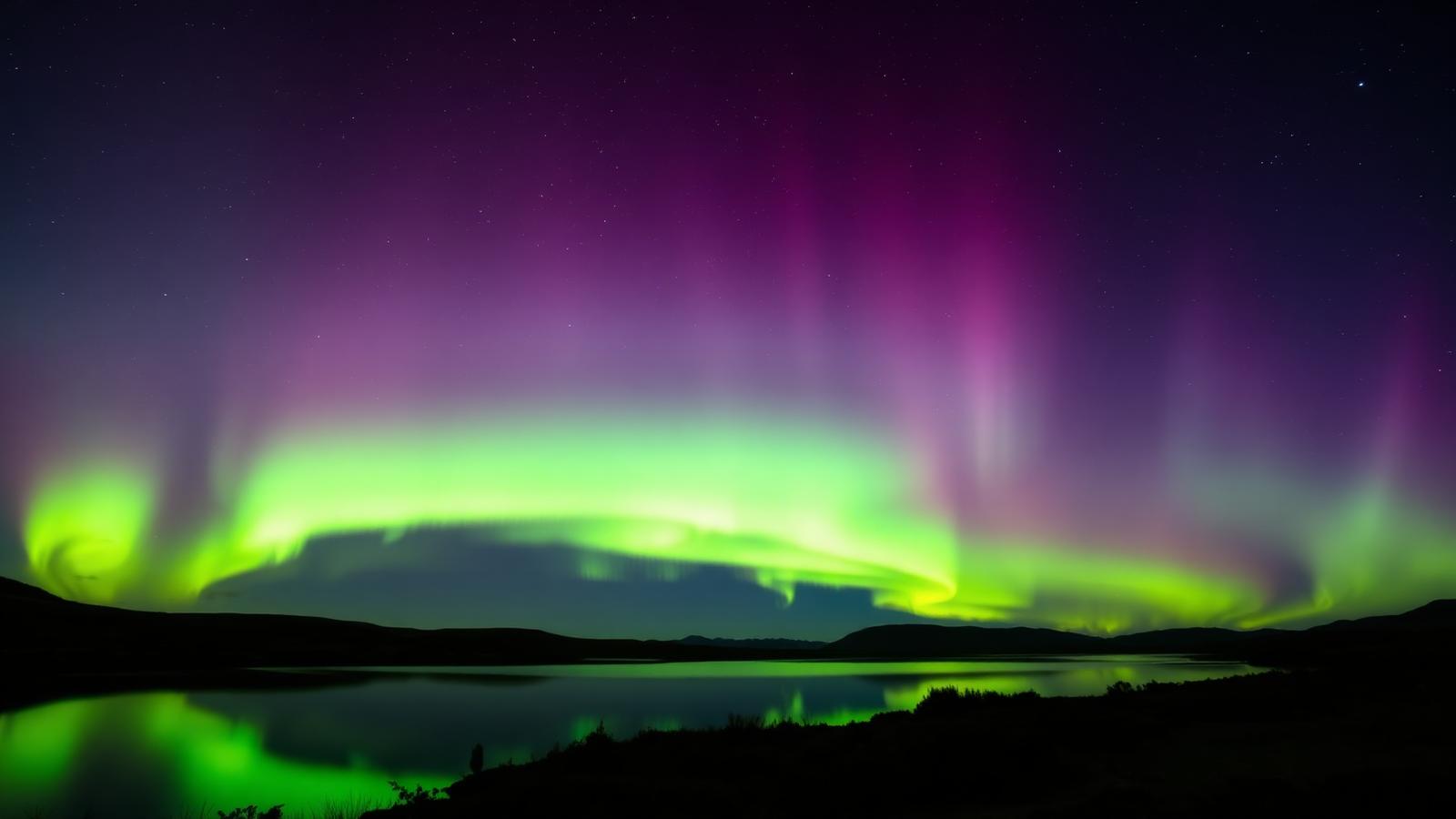
New Zealanders looking up on a January night were rewarded with one of the most memorable natural displays of the summer, as aurora australis lit the sky in vivid colours across parts of the country.
The southern lights are usually associated with the deep south, where dark skies and latitude give stargazers a better chance of seeing the glow. But this event was different. A powerful solar radiation storm pushed the auroral activity farther north than usual, creating rare viewing opportunities for people who might not normally expect to see anything more than stars and cloud.
Photos shared publicly showed waves of pink, green and purple over locations including the Ashburton Lakes, Lincoln in Canterbury and Gore in Southland. The images carried the names of ordinary New Zealanders who had stepped outside at the right moment.
For many, the aurora was not a planned event so much as a lucky interruption. A message from a friend, a social media alert, a break in the clouds or a glance out the window was enough to send people into backyards, paddocks and quiet roads with phones and cameras pointed skyward.
The science behind the spectacle begins far from New Zealand. Auroras occur when charged particles from the sun collide with gases high in Earth's atmosphere. Those collisions release light, creating the curtains and bands that appear to move across the sky. When solar storms are especially strong, the auroral oval can expand, making the lights visible much farther from the poles than usual.
The United States' Space Weather Prediction Center said an S4 severe solar radiation storm was in progress at the time, describing it as the largest event of its kind in more than 20 years. Such storms can affect aviation, satellites and space operations, but for most people on the ground, the immediate result was wonder.
There is also something particularly New Zealand about the way the aurora was enjoyed: people standing quietly in rural darkness, watching the sky over hills, lakes and paddocks. No ticket, no stage, no schedule. Just the sun, the atmosphere and the luck of clear weather.
By morning, the light show had passed, but the photos remained. For those who saw it, January 2026 will be remembered as the night the southern lights came closer, and New Zealanders looked up together.