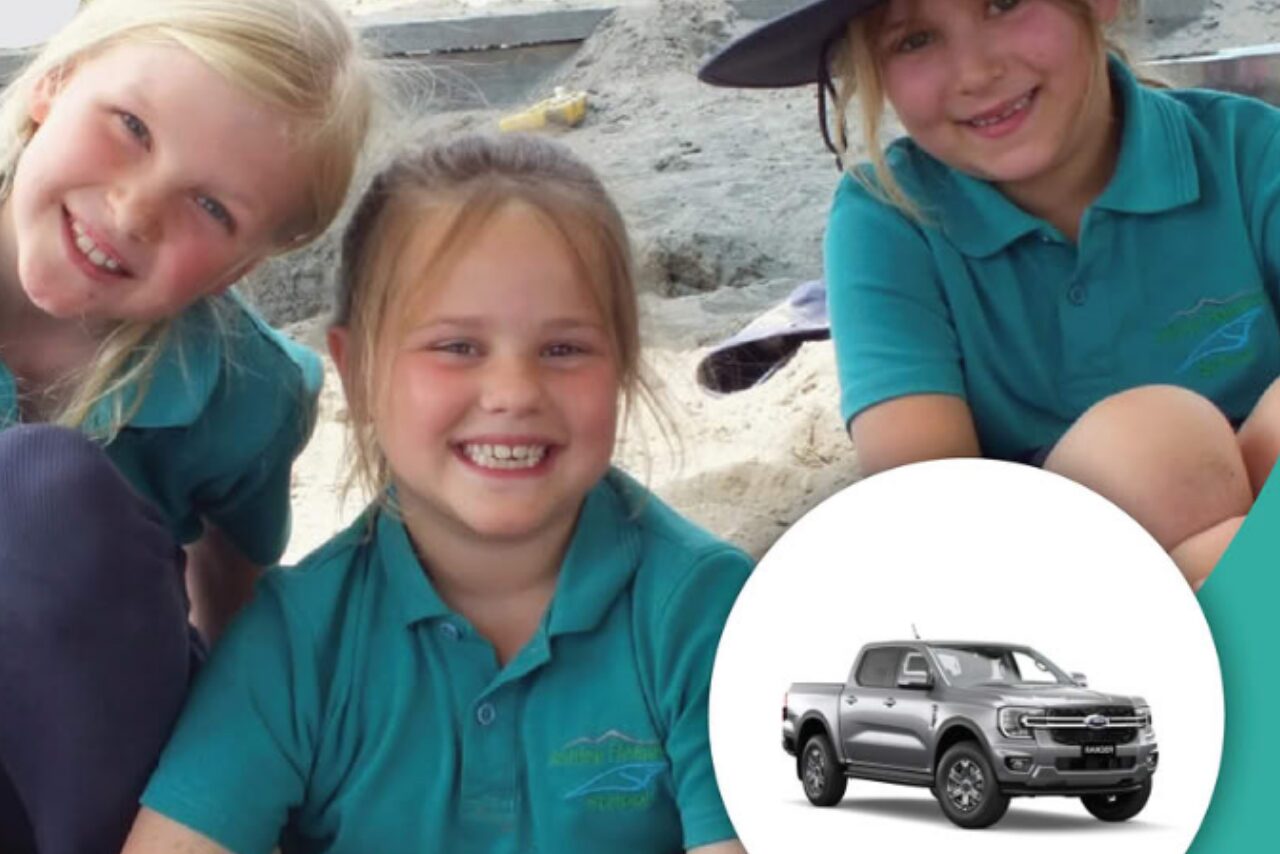
Ashley Rakahuri School has turned a North Canterbury playground problem into a national raffle, offering a 2026 Ford Ranger as the headline prize in an effort to rebuild a safe play space for its pupils.
Chris Lynch Media reported on 3 July that the school's PTA is running what it describes as the biggest fundraiser the school has attempted. The first prize is a 2026 Ford Ranger XLT Double Cab 3.0D 4WD. The dedicated lottery website says the vehicle is valued at up to $74,000 including GST and on-road costs, with second and third prizes of $2,000 and $1,000 cash.
The practical details are clear. Tickets are $40 each, the raffle is limited to 5,000 tickets, entries close on 24 September 2026 and the draw is scheduled for 25 September 2026 at the school. The school's lottery page says the fundraiser is intended to support the rebuilding of a run-down playground so students have a safe and fun place to learn and play.
For a small rural school, the scale of the prize is the point. Traditional cake stalls, mufti days and local raffles can help, but major playground work can quickly move beyond what a school community can raise through ordinary weekend fundraising. A vehicle prize gives the campaign a wider audience and a reason for people outside the immediate school roll to take notice.
The fundraiser also shows how rural schools often rely on community energy to close gaps that feel basic to parents. A playground is not a luxury item in a primary school. It supports movement, social learning, imaginative play and the kind of low-structure activity that gives children a break from the classroom. When equipment becomes tired or unsafe, the issue is both educational and practical.
There is a familiar fairness question in stories like this. Communities with strong volunteer capacity, local networks and the confidence to run large fundraisers can sometimes move faster than communities without the same resources. Ashley Rakahuri's PTA appears to have built an ambitious campaign, but the need behind it highlights how much unpaid parent and community labour still sits underneath school facilities.
The raffle structure does provide transparency. The lottery page sets out the prize values, ticket price, closing date, draw date and the collection requirement for the vehicle from Team Hutchison Ford in Christchurch. That matters because a fundraiser of this size depends on public trust. Supporters need to know what they are entering, where the money is intended to go and when the outcome will be decided.
The timeline also gives the campaign room to build beyond the school gate. With entries open until late September, the PTA has nearly a full school term to reach former families, local businesses, farming contacts, sports clubs and wider North Canterbury supporters. That longer runway is useful because a $40 ticket is a considered purchase for many households, especially in winter, and repeated community reminders will probably matter more than a single launch burst.
The wider Canterbury angle is that small communities often find creative ways to fund what they cannot wait years to replace. A playground may not carry the drama of a major infrastructure project, but it is daily infrastructure for children. If the raffle sells strongly, Ashley Rakahuri School will have turned a local facilities problem into a region-wide community campaign.