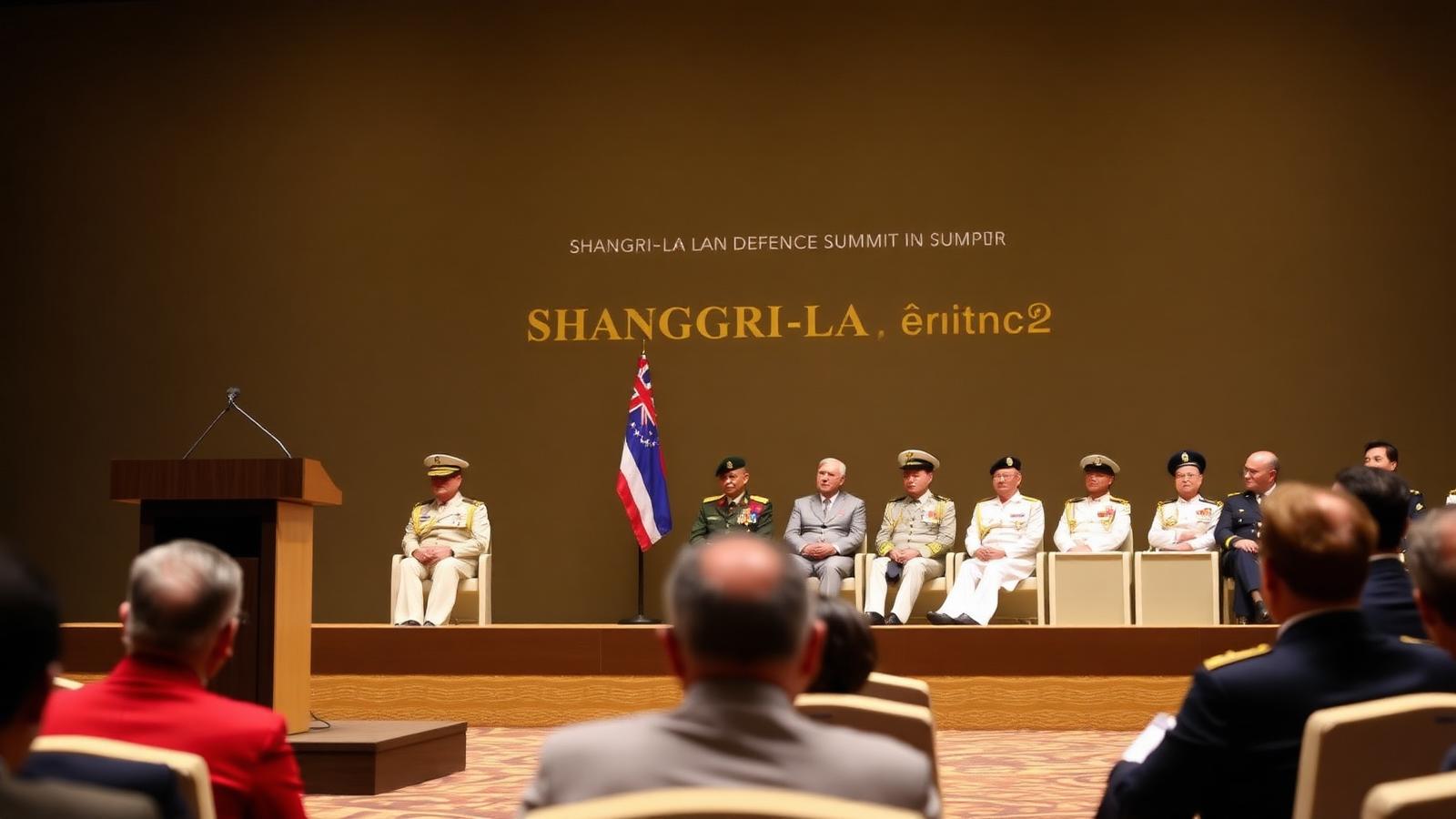
New Zealand's Defence Minister Chris Penk was sitting in the front rows of the Shangri-La Dialogue in Singapore on Saturday morning when US Secretary of Defence Pete Hegseth turned his remarks toward the Pacific. The moment was not comfortable. When a New Zealand delegate asked Hegseth directly whether he considered this country's plan to lift defence spending from one percent of GDP to two percent as "freeloading," the Pentagon chief did not hedge.
"If I'm being honest, two percent is not enough, and so two percent is freeloading," Hegseth said. "I don't have anything against New Zealand. I want partners to step up." He added that nations meeting his preferred benchmark of 3.5 percent of GDP would be fast-tracked for arms sales, deeper industrial collaboration, and expanded intelligence sharing. Those below it would face a different kind of relationship with Washington.
The remarks landed with particular force because they came only two days after Finance Minister Nicola Willis delivered Budget 2026, which included $2.3 billion in capital funding and $1.2 billion in operating expenditure for defence over the forecast period. The Government has described this as a significant step toward meeting alliance obligations, and Minister Penk has pointed to specific commitments including drone acquisition, naval maintenance, and military infrastructure upgrades.
Hegseth's broader address at Asia-Pacific's premier annual security forum was aimed primarily at NATO allies and European states. He praised Australia, Japan, and the Philippines by name as model partners. New Zealand was not among the countries singled out for praise.
New Zealand officials were measured but firm in response. A spokesperson indicated the Government remained committed to its current trajectory, noting the Budget boost represented the largest single increase in defence funding in a generation. Analysts pointed out that New Zealand's GDP-relative spending reflects both its geographic position and a long-standing tradition of contributing to collective security through peacekeeping, humanitarian operations, and regional development assistance.
With a general election scheduled for November and defence spending already a contested topic, the public rebuke from one of the most influential figures in US defence policy adds an international dimension to a domestic debate already running hot.