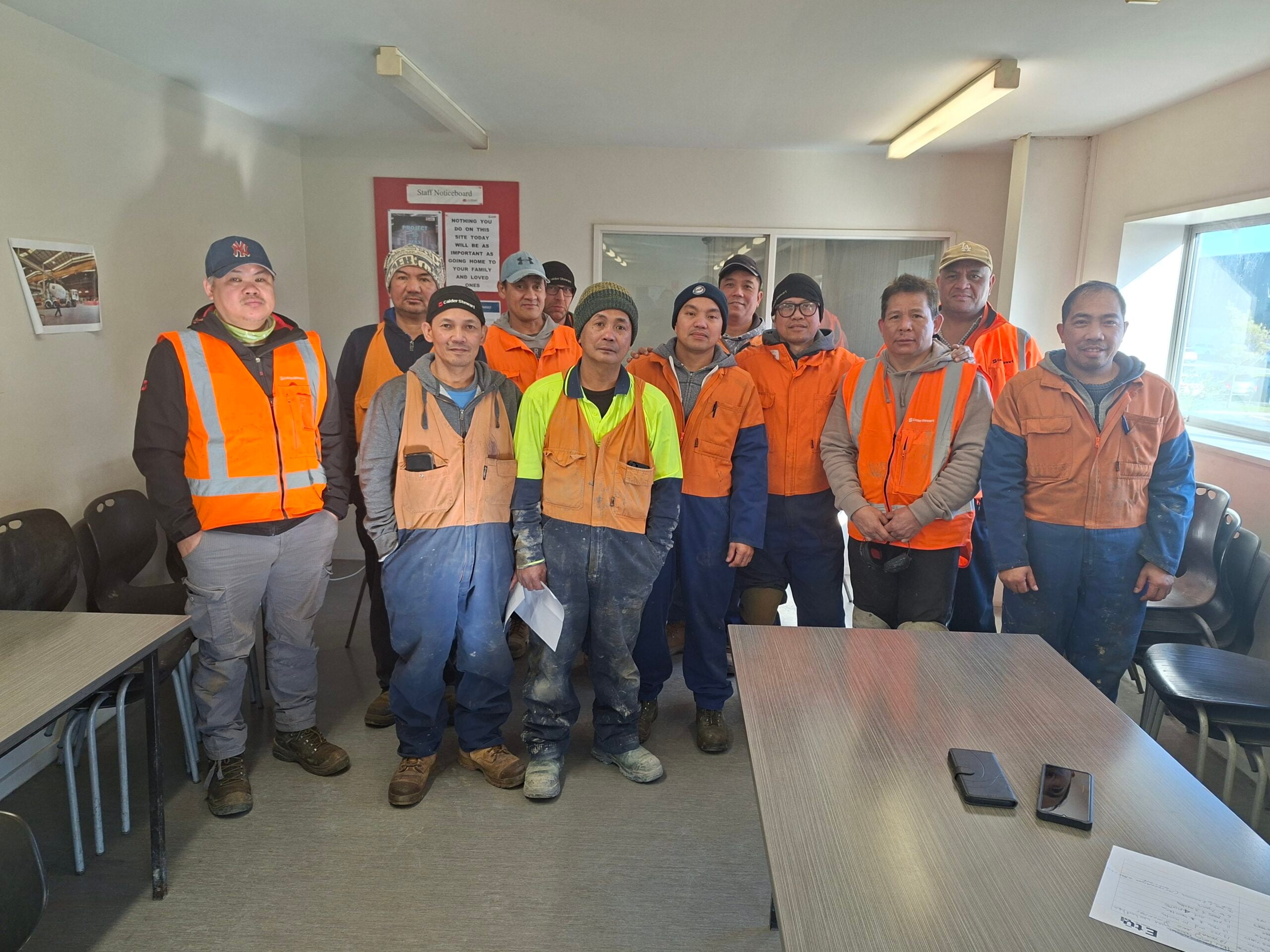
A proposed closure at Calder Stewart's Hornby precast concrete operation has put the Stewart family's ownership story under fresh scrutiny, after E tu said 15 Christchurch workers are facing redundancy only weeks after the family was named on the 2026 NBR Rich List.
The union published the claim on 2 July, saying Calder Stewart had tabled a closure proposal the previous week. E tu said the Stewart family, which owns Calder Stewart, had been listed with an estimated $1.1 billion fortune built through industrial property development and investment. Chris Lynch Media also reported the union's account on 2 July.
The founder and owner focus is important because Calder Stewart is not an anonymous brand to Canterbury industry. The company presents itself publicly as a property and building partner with roots going back to 1955. It has become part of the region's industrial development story through construction, property and large-scale logistics and manufacturing projects. When a long-running, family-owned company faces a dispute over local jobs, workers and residents are likely to judge it against that history as well as against current market conditions.
E tu's version of events is specific. It says affected workers made concessions last year after being told their pay was too high compared with competitors. The union says those concessions included cuts to tool allowances and long-service leave entitlements, along with no wage increase, and that workers accepted them to help keep the company competitive and protect jobs. The union is now preparing a response to the closure plan after meeting affected members.
The company may have commercial arguments that are not fully visible in the public material. Precast concrete, construction and industrial property are exposed to project cycles, costs, tender pressure and shifts in demand. It would be wrong to assume from the public union statement alone that the proposal has no business rationale. But the timing explains why the issue has become politically and emotionally sharper than a routine restructuring notice.
For the 15 workers, the question is immediate: whether their jobs can be saved, redeployed or wound down with fair support. For Christchurch, the broader issue is how the benefits and risks of large industrial businesses are shared. Workers are often asked to accept restraint during difficult periods. When the owners of the same business are publicly associated with very large wealth, redundancy proposals can quickly become a test of corporate responsibility rather than only a question of site economics.
The dispute also lands in Hornby, a part of Christchurch tied closely to manufacturing, logistics, distribution and industrial land. These are not abstract head-office roles. They are physical jobs in a part of the city where industrial work has long supported households. Losing even a small number of stable jobs can matter in a local labour market, especially for workers with specialist experience and family commitments.
The next step is the proposal process. E tu says it will put a response to Calder Stewart. The useful public test will be whether the company can explain the business case, genuinely consider alternatives and show how workers who made earlier concessions are being treated now. A family-owned industrial success story carries reputational value. In this case, it also carries expectations.