A Christchurch engineering site visit today is putting the Brougham Street overbridge back in focus as a practical safety project on one of the city's most pressured transport corridors.
Engineering New Zealand listed the Canterbury Branch visit for Wednesday 29 July from 4pm to 5pm at the Fulton Hogan Site Office on Simeon Street. The event description says the overbridge is part of the State Highway 76 Brougham Street upgrade and is designed to provide a grade-separated pedestrian and cycle crossing over one of Christchurch's busiest freight routes. The source also says Brougham Street carries more than 45,000 vehicles a day and serves as the principal freight link between Christchurch and Lyttelton Port.
Those numbers explain why the project matters beyond engineering circles. Brougham Street is both a city road and a regional freight artery. It carries port traffic, commuters, service vehicles, buses, cyclists and pedestrians through an urban corridor that can feel difficult to cross safely. For people in nearby neighbourhoods, a busy freight route is not just a line on a transport map. It can divide communities, affect school and work journeys, and make active transport feel less realistic.
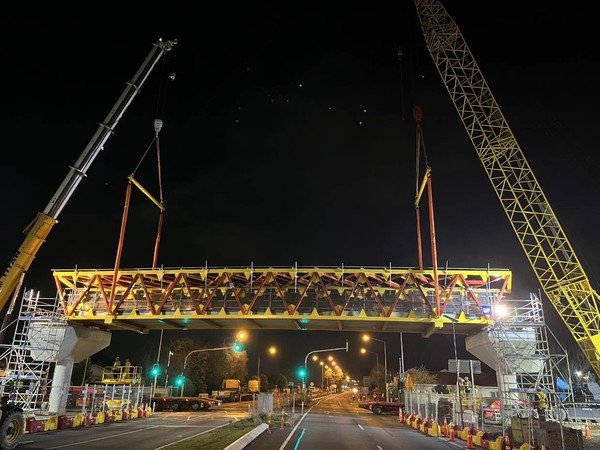
The overbridge responds to that specific problem by separating people on foot and bikes from live highway traffic. Engineering New Zealand's listing describes a 36-metre single-span structure, prefabricated off-site and installed through complex crane lifts over a live state highway. That construction method matters because it points to the challenge of building safety improvements without shutting down a route that Christchurch and the port depend on every day.
For the transport network, grade separation is a stronger intervention than asking vulnerable users to negotiate a hostile crossing. It gives pedestrians and cyclists a clear route while keeping freight and general traffic moving. That does not remove every access problem on the corridor, but it addresses one of the most visible barriers: the need to cross a high-volume road where mistakes can have severe consequences.
The site visit is also a reminder that road safety is not only enforcement or driver behaviour. Design decisions shape what people can realistically do. If a road is built primarily for throughput, people outside vehicles may be pushed into risky or inconvenient movements. If a crossing is designed carefully, it can reconnect areas and make walking or cycling more plausible for short local trips.
Christchurch has spent years debating transport priorities, from central-city cycleways to suburban congestion and freight access. Brougham Street sits at the centre of that debate because it must serve multiple purposes at once. The city needs efficient port links, but it also needs safer neighbourhood connections and credible alternatives to short car trips.
Today's visit gives engineers and sector observers a closer look at how the project is being staged, including prefabrication, crane work, utility coordination and temporary traffic management. For residents, the more important outcome will be simpler: a safer crossing over a road that has long acted as a barrier. If the overbridge works as intended, it will be judged not by the complexity of the lift, but by whether people actually use it and feel safer doing so.