The University of Canterbury has secured approval from China's Ministry of Education to establish two Joint Education Institutes with partner universities in China, giving the Christchurch university a larger transnational education presence and a clearer pathway into high-demand disciplines. UC announced on 23 June that the approvals cover a Science and Engineering institute with Xi'an University of Architecture and Technology and an Education institute with Shanghai Normal University.
The decision is not just a university administration story. It gives Christchurch a direct connection to how international education is changing. Rather than relying only on students travelling to New Zealand, universities are increasingly building offshore programmes, joint institutes and international partnerships that let students study foreign qualifications closer to home. For UC, that means Christchurch teaching, programme design and academic relationships can influence students in China while also strengthening the university's global profile.
The XAUAT-UC Science and Engineering Joint Institute will connect UC's Faculties of Engineering and Science with a Chinese university recognised for civil engineering, architecture and urban planning. UC says five programmes will be delivered at XAUAT: Bachelor of Computer Science, Bachelor of Science in Environmental Science, Master of Civil Engineering, Master of Product Innovation and Master of Software Engineering. Once fully operational, the institute is expected to teach more than 1,000 students.
That programme mix is commercially and socially relevant. Computer science, civil engineering, environmental science, software engineering and product innovation all sit close to problems facing fast-growing cities: infrastructure, climate adaptation, housing, digital systems, productivity and sustainable design. Christchurch has its own experience with rebuilding, urban change and engineering-led resilience, which gives UC a practical story to carry into the partnership.
The second institute, the UC-SHNU Joint Education Institute in Education, will link UC's Faculty of Education with Shanghai Normal University. UC says the institute will focus on areas including artificial intelligence in education, digital pedagogy, early childhood education, education technology and comparative education. The expected scale is also about 1,000 students once fully operational, with courses including a Bachelor of Arts in Mathematical Sciences Education, a Master of Artificial Intelligence and Digital Education, a Master of Early Childhood in Digital Pedagogy, and PhD study in Education Technology and Comparative Education.
For Canterbury, the education institute may be just as important as the engineering one. Schools and tertiary providers everywhere are trying to understand how AI and digital tools should change teaching without weakening human judgement, equity or student wellbeing. A joint institute focused on those themes gives UC researchers and educators a larger platform for the questions already facing local classrooms.
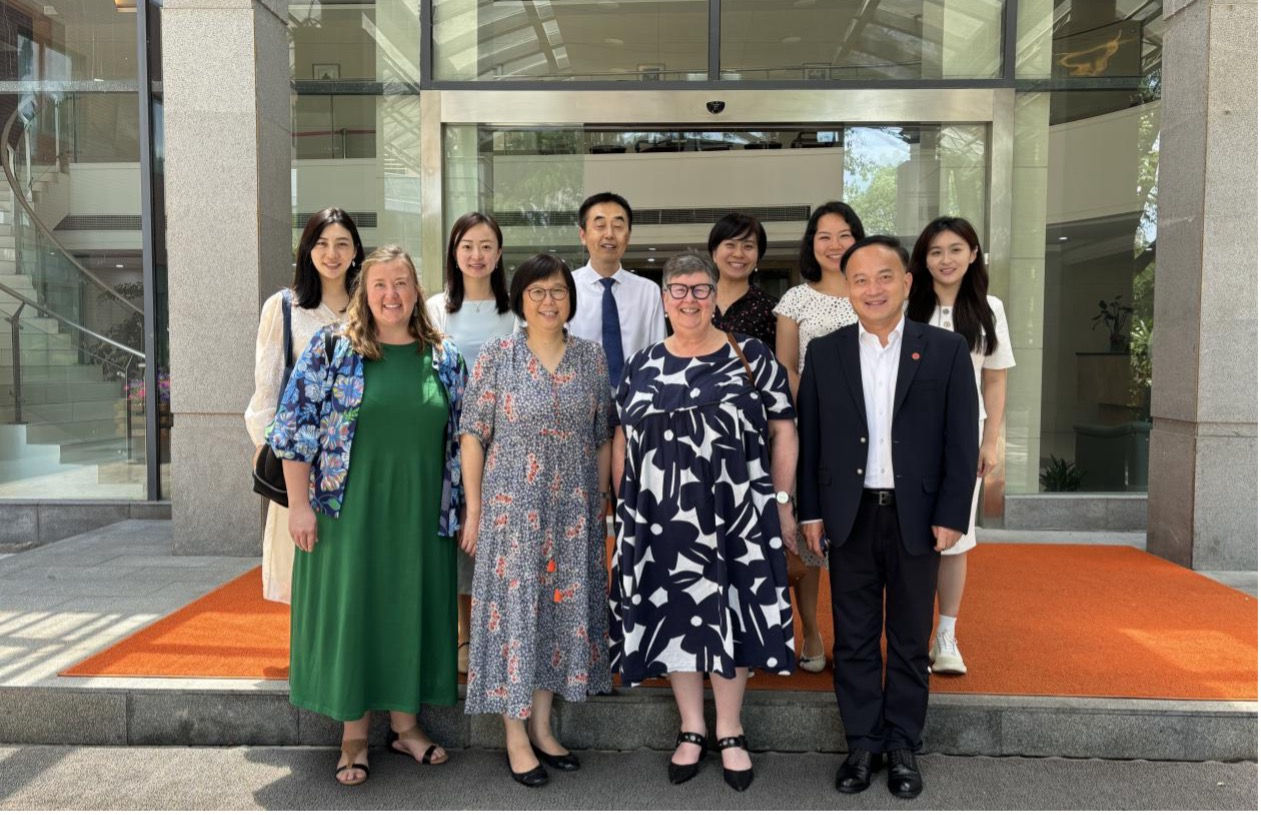
UC says a delegation will travel to China later this year to formally launch the institutes with both partner universities. That next step will matter because approvals are only the start. The real test will be programme delivery, student support, academic quality, staff collaboration and whether the partnerships create reciprocal value rather than simple brand extension.
For The Garden City Gazette readers, the local significance is clear. UC is one of Christchurch's major institutions, and its international reach affects the city's reputation, research economy and graduate pathways. Two joint institutes expected to teach roughly 2,000 students between them once operational show that Canterbury's education sector is not confined to the Ilam campus. It is part of a wider Asia-Pacific education network, and Christchurch should pay attention to how that network grows.