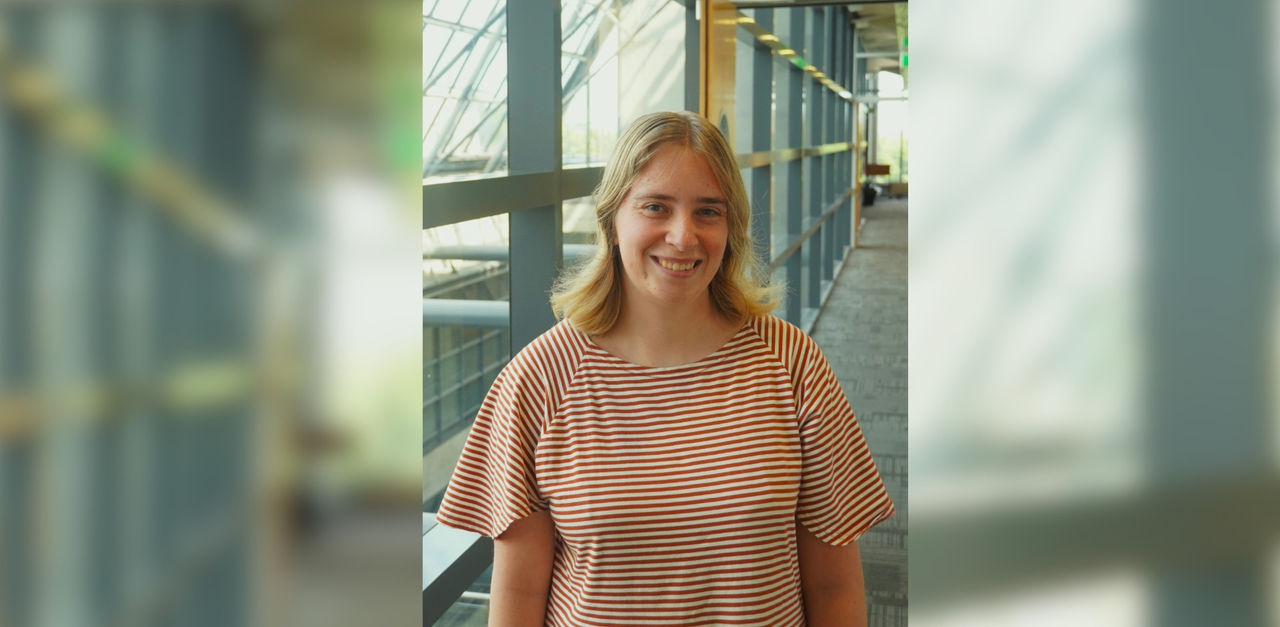
University of Canterbury PhD candidate Kate Truman has won the 2026 Royal Society Te Apārangi Hatherton Award for research at the intersection of mathematics and evolutionary biology.
The annual award, which carries a $2,500 prize, recognises an outstanding scientific paper by a PhD student. Truman’s work examines whether a mathematical model used to reconstruct evolutionary histories can be relied on when researchers draw on fossils or samples taken at different points in time.
Truman, who is studying Data Science at UC, collaborated on research published in Systematic Biology. The work showed that the fossilised birth–death model can be used with confidence to study evolutionary change and epidemiology.
That conclusion matters because a 2020 finding had raised questions about whether some evolutionary models could distinguish between different possible histories. In practical terms, that uncertainty affected how confidently scientists could use particular models to estimate such things as species emergence, extinction and the spread of infectious disease.
The model Truman examined allows rates such as extinction to change through time and incorporates fossil evidence without assuming that a fossil means a lineage immediately ended. It can therefore bring together information from living organisms and distant ancestors in the same analysis.
Truman came to phylogenetics from a computer-science background after receiving a UC Aho Hinatore | Accelerator PhD Scholarship in 2022. She said the award recognised both the research result and the support that helped her move into a new field.
For Christchurch, the result is a reminder that the city’s research contribution is not confined to laboratory equipment or headline discoveries. Rigorous mathematical work can shape the reliability of later research in biology, conservation and public health.