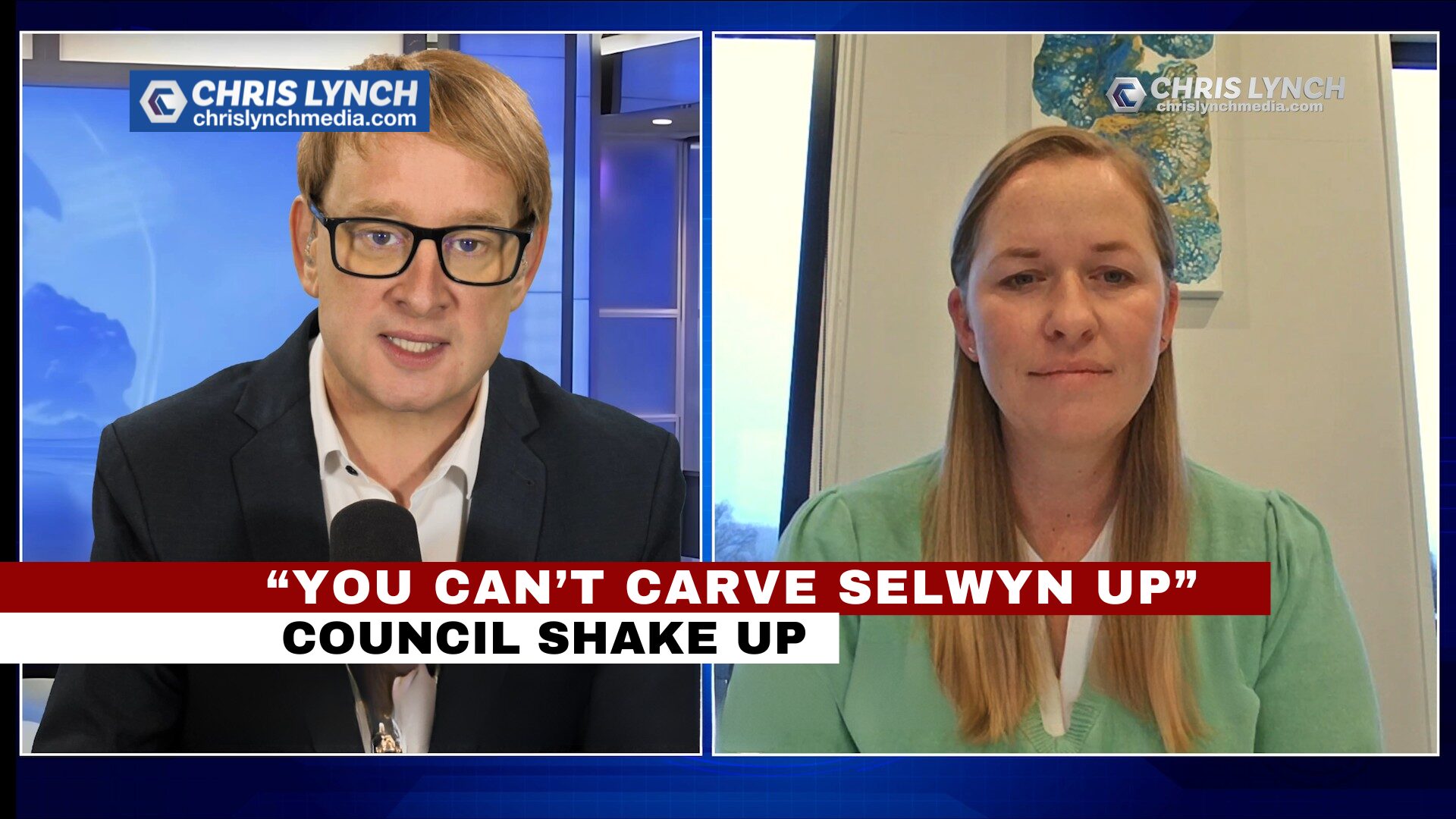
Selwyn Mayor Lydia Gliddon has put a clear boundary around local government reform talks, saying the district should be treated as one community as Canterbury councils work toward the Government's Head Start deadline.
The reform issue is moving quickly. Councils face an August 9, 2026 deadline to submit proposals for new unitary authorities. The same day, a Canterbury Mayoral Forum release said the forum had agreed to continue supporting a Head Start proposal for the whole region. That places Selwyn inside both a local identity debate and a wider regional governance conversation.
Gliddon's central point is that Selwyn should not be split into pieces to satisfy a larger map. She said the council was working through options and that a mayoral forum meeting would bring important conversations during the week. She said the preferred direction appeared to be either standing alone as a unitary authority or looking toward neighbours for amalgamation.
The practical issue is not just where lines are drawn. Selwyn is one of New Zealand's fastest-growing districts, with urban growth around Rolleston, Lincoln and other townships tied to rural land, water, roads, employment and Christchurch commuter patterns. Separating rural and urban communities could alter debt, infrastructure responsibility, rating bases and representation.
Gliddon also pointed to the need for neighbour consent. She said she was not interested in putting forward proposals that affected other districts without their blessing. That matters because local government reform can easily become a competition between councils, with each trying to protect its balance sheet, identity and infrastructure obligations.
Her comments also show why the reform debate is broader than amalgamation. Gliddon said the important conversation was about how functions are delivered and how councils can do that efficiently without costing people more. She also said some responsibilities, including rivers, flooding and catchments, still need to be delivered at a regional level or through a structure that allows integrated planning.
That argument has added weight on a day when Environment Canterbury is managing a live flood warning across the region. Flood protection, river management and catchment planning do not stop at the edge of a district boundary. Any new governance model would need to preserve regional coordination while satisfying local communities that their identity and debt exposure are protected.
Selwyn residents should watch two dates. The first is the public briefing Gliddon referred to for 15 July, when the council is expected to give clearer direction on what reform options could mean. The second is the August 9 proposal deadline.
The question for Canterbury is whether the Head Start process can produce a structure that feels regional enough to handle shared services and hazards, but local enough for communities like Selwyn to believe they are not being carved up for convenience.
The next useful reporting step will be the 15 July Selwyn briefing and any formal position that follows. Until then, Gliddon's comments are best read as an opening marker: Selwyn is willing to talk about reform, but wants its urban and rural communities considered together.