Canterbury emergency crews spent Saturday dealing with a sharp reminder that winter does not remove fire risk when warm temperatures, dry ground and wind line up. Fire and Emergency New Zealand crews were battling eight fires across Canterbury and as far north as Marlborough during the afternoon and evening. Christchurch recorded 25.1C, its warmest June day since records began in 1943, beating the previous June record of 22.5C set in 1988.
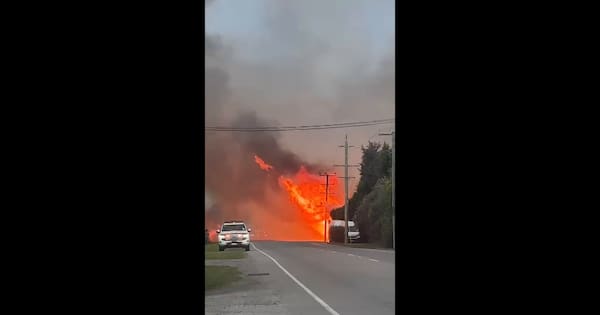
The clearest local pressure point was Selwyn Road near Rolleston, where a substantial fire involving a farm shed and adjoining trees was reported at about 3.42pm. The response peaked at 16 crews, with ten still at the scene by evening. That was only one part of the day. Firefighters had already been called to Eyrewell in the Selwyn District at 8.35am, where 13 crews and a helicopter were involved at the height of the response. A vegetation fire followed at Gebbies Valley near Christchurch shortly before 12.30pm, drawing 16 crews, while a forestry fire near O Carrolls Road in Hawarden was reported at 2.18pm and brought 18 crews and a helicopter at its peak.
Other incidents included an escaped burnoff at Mt Culverden, a hedge fire at Emu Plain, a tree fire on Inland Kaikoura Road, an escaped burn pile at Waipara, and trees on fire at Ward in Marlborough. The list matters because it shows a regional pattern rather than one isolated emergency.
Assistant District Commander Brian Keown said rain and lower temperatures expected on Sunday would ease the situation, but also warned that Canterbury was extremely dry for the time of year. People often associate outdoor fire danger with late summer, but the region has had dry periods and warm spells that can create risk even in June.
For residents, the practical advice is direct. Anyone who lit an outdoor fire in the past week should make sure it is fully out, not just apparently quiet on the surface. Burn piles, hedges, shelter belts and dry vegetation can restart or spread when wind rises. Rural and lifestyle-block households should treat winter burnoffs with the same caution they would apply in a declared high-risk period.
A single hot June day does not explain every fire. But a 25.1C record, eight active fire responses, and official warnings about dry conditions point in the same direction: Canterbury needs to treat winter fire safety as an active concern when the weather behaves more like late spring than midwinter.