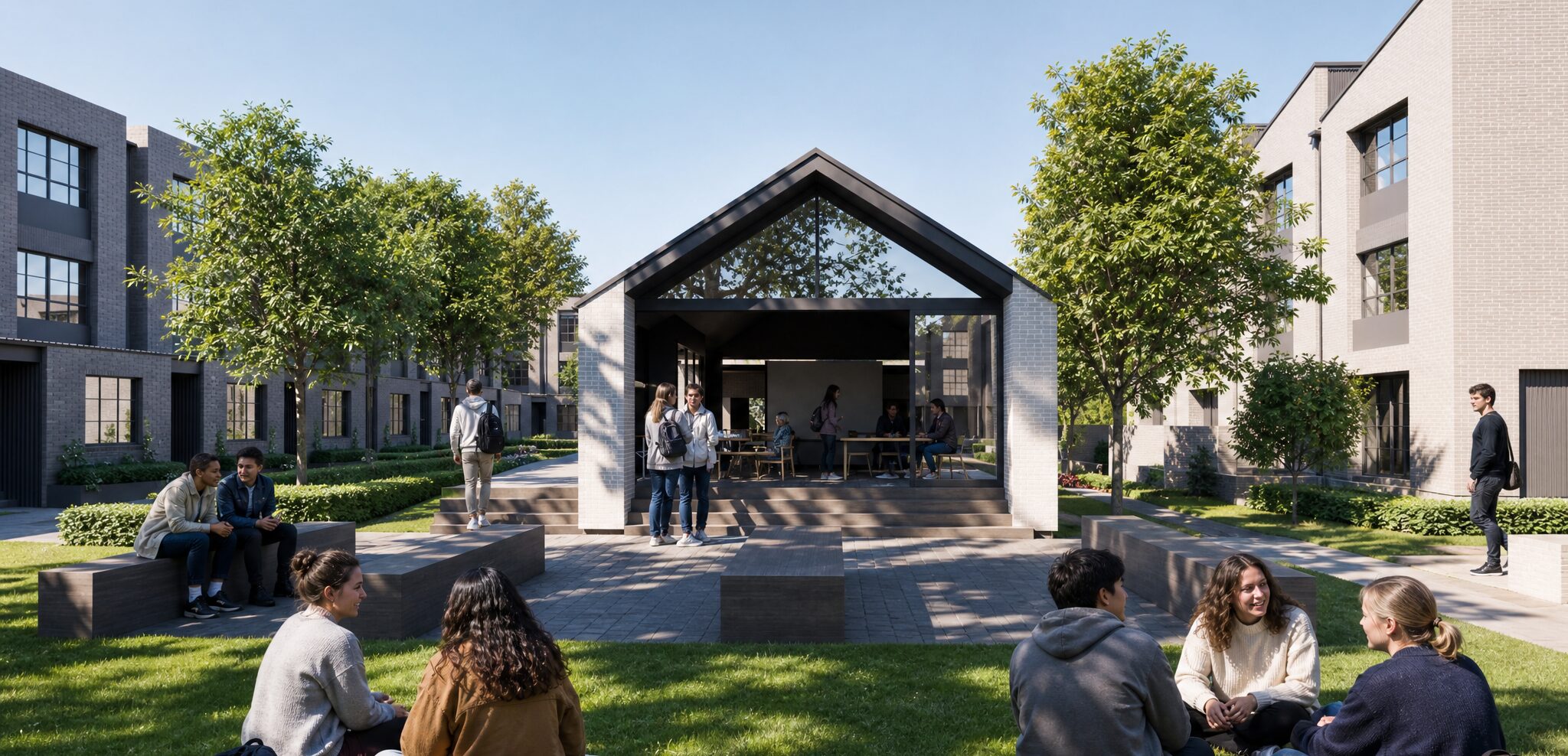
Mainland Capital has put a founder-led Christchurch property story back into public view by revealing designs for a student accommodation village on the former Antonio Hall site at 265 Riccarton Road.
The development is significant because it ties together three pressures that are easy to discuss separately: what happens to long-derelict earthquake-damaged land, how Christchurch houses students near the University of Canterbury, and how local property investment firms shape the city's post-quake urban fabric. Mainland Capital manages about $1 billion in real estate assets and was established in 2010 by Ben Bridge and Tim Jones.
The site is about 700 metres south of the University of Canterbury and has stood derelict since the 2011 Canterbury earthquakes. Mainland Capital's plan would deliver more than 450 beds across connected townhouses, courtyards and pedestrian laneways. Construction is expected to begin by the end of 2026, with stage one expected to open for the start of the 2028 academic year.
This is the daily pack's founder-focused article because the story is not only about an address or a design image. It is about a Christchurch-linked investment platform founded after the earthquakes now taking on a highly visible piece of Riccarton land. The founders' names matter because local ownership, capital structure and development judgement all affect whether long-stalled sites are returned to use.
The design language is being pitched as more than a row of bedrooms. The village draws on the mews style of university towns including Edinburgh, Bath and Oxford. Mainland Capital's Chris Scott, head of finance and acquisitions, said the process started with the community the company wanted to create rather than with a conventional developer-led building layout.
The target market is also specific. The accommodation is aimed at second-year, postgraduate and international students, filling a gap between first-year halls and the private rental market. Mainland Capital said the homes would be new, Healthy Homes compliant, fully furnished and professionally managed.
If delivered, the plan would add a managed housing option near the university at a time when Christchurch's student and rental markets remain sensitive to supply, price and location. It could also reduce pressure on some suburban houses if students who want a purpose-built option can live closer to campus.
The site features listed include a central communal pavilion, quiet study spaces, an events area, games and social zones, parcel lockers, electric ride-share facilities, garden courtyards, outdoor seating and informal lawns. A large historic elm tree is expected to be part of the central setting.
The public test now is delivery. The design reveal gives Riccarton and university communities a clearer picture of what Mainland Capital wants to build, but the timeline still stretches across several years. For a site that has been visibly underused since the earthquakes, the important question is whether the proposal can move from supplied renderings to construction before another academic cycle passes.