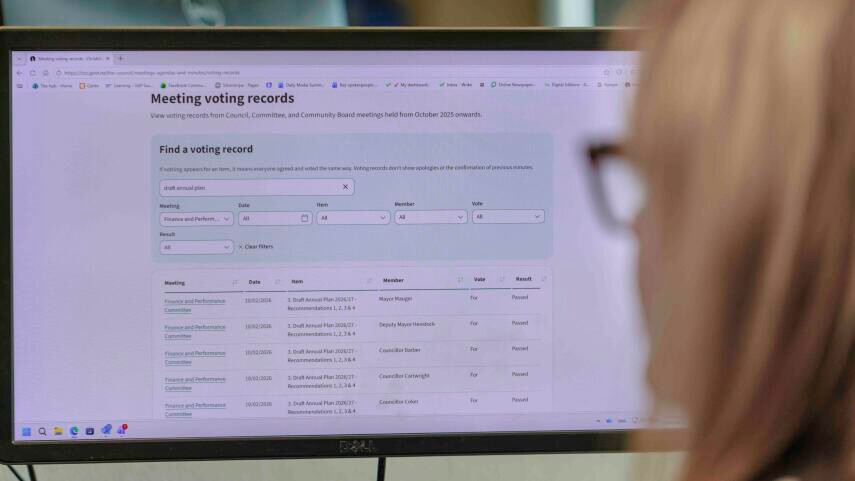
Christchurch City Council has launched a new meeting voting records search tool, giving residents a faster way to check how elected members voted without reading through agendas and minutes one meeting at a time. The tool lets people search records by meeting, elected member and voting outcome. Records go back to October 2025 and are uploaded within two working days of the meeting.
The change sounds technical, but it addresses a very practical problem in local democracy. Council decisions are often recorded in formal papers that are available to the public but difficult for ordinary residents to use quickly. People who want to know how a councillor voted on an Annual Plan matter, a committee decision, a planning issue or a community board topic have usually had to know where to look, which meeting to open and how to read the minutes. The new tool lowers that barrier.
Governance Processes team leader Matt Boult said the intent is to improve transparency and make decision-making records easier for residents, media and elected members themselves to review. That matters in a city where debates over rates, stadium planning, transport, central-city rules, water infrastructure and local facilities can run for months.
There are limits. A voting record shows the final vote, not every reason behind it. Residents still need agenda papers, meeting livestreams, reports and councillors' own explanations to understand the full context. The tool should be treated as an entry point, not the whole story.
Even with that caution, the public value is clear. Community groups can track decisions relevant to their neighbourhoods. Journalists can quickly verify claims. Councillors can review their own records. Residents can search for key words, meeting dates or elected members instead of relying on memory or social media summaries.
Christchurch has made a small but meaningful improvement to civic visibility. The real test will be whether residents use it before election debates, submissions and rates decisions, when accurate records matter most. A transparent record does not remove disagreement, but it makes disagreement more honest.