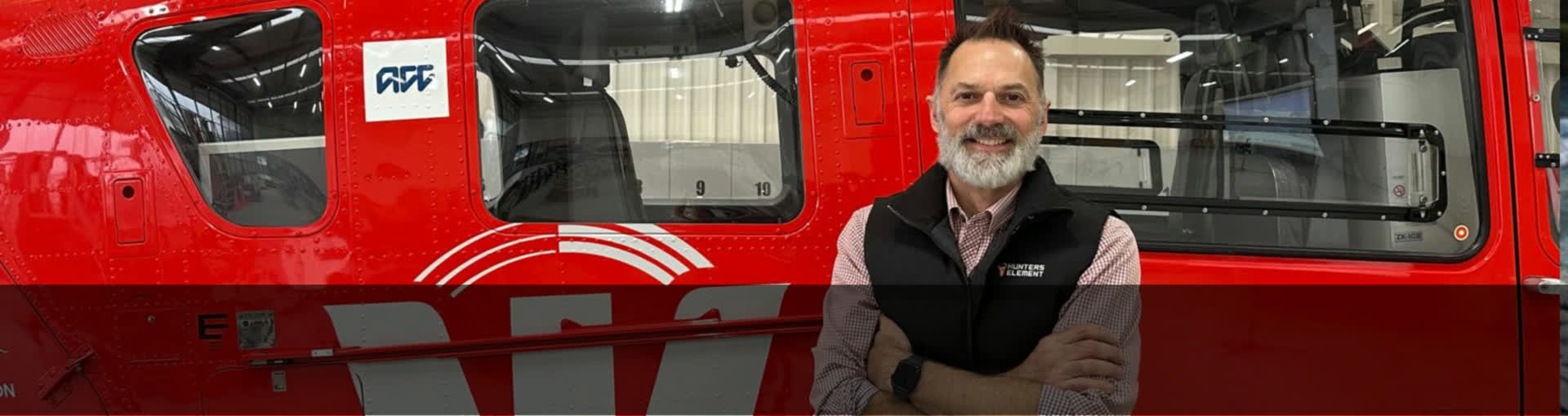
Anton Drazevic has returned to Christchurch to lead two of the region's most important emergency air services, taking up the chief executive role at the Canterbury West Coast Air Rescue Trust and the NZ Flying Doctor Trust. The appointment gives Canterbury a leadership change at a service many residents hope they never need but rely on being ready every hour of the year.
The official Air Rescue announcement says Drazevic first encountered the service in 2010, when a rescue helicopter mission involving a family member connected him personally to the work. That history gives the appointment a local human edge rather than making it only a governance change. He now leads the organisations behind rescue helicopter and fixed-wing air ambulance services serving Canterbury, the West Coast and wider New Zealand patient-transfer needs.
Drazevic brings more than 20 years of executive leadership, operations and community-impact experience across New Zealand and Australia. Chris Lynch Media reported that he most recently served as chief executive of the Nelson Environment Centre, described by the Trust as New Zealand's oldest community environmental NGO. That background places him in the mission-led sector rather than a purely commercial one.
Canterbury West Coast Air Rescue Trust chairman Murray Willocks said Drazevic brought a mix of skills, operational knowledge and fresh perspective to both organisations. The trust's own announcement framed the appointment around community support, patient wellbeing and the partnerships needed to keep the service operating. That matters because air rescue is not funded or sustained by machinery alone. It depends on crews, clinical systems, donors, sponsors, aviation partners, hospitals and public trust.
The timing is significant. The Trust says it is preparing to unveil its final H145 rescue helicopter, the last of four state-of-the-art aircraft purchased for the Canterbury, West Coast and Nelson rescue helicopter services. It has also invested in specialist crew equipment, training and service infrastructure. A new chief executive arriving during that transition has to turn capital investment into reliable everyday capability.
The NZ Flying Doctor Service adds another layer. It provides inter-hospital air ambulance services across the country and is especially important when critically ill patients need specialist care in another centre. Chris Lynch Media reported that the Flying Doctor Service transported 1,402 patients in 2025. Behind that number are families whose emergency did not fit neatly inside one district health boundary.
For Christchurch readers, the practical significance is clear. The city is a South Island medical hub, and Christchurch Hospital sits at the centre of many transfers from smaller towns and regional hospitals. Air rescue and flying doctor services are part of the hidden infrastructure that makes specialist care reachable for people in rural Canterbury, the West Coast, Nelson, Marlborough and beyond.
Drazevic's early message has focused on the people behind the service and the community belief that sustains it. That is a useful starting point, but the tests ahead will be concrete: crew readiness, fundraising strength, aircraft availability, clinical coordination, rural access and public confidence. The appointment is therefore a leadership story, a health story and a Canterbury resilience story at the same time.